Store Locator
 Track your Order


Peptide stability in research settings
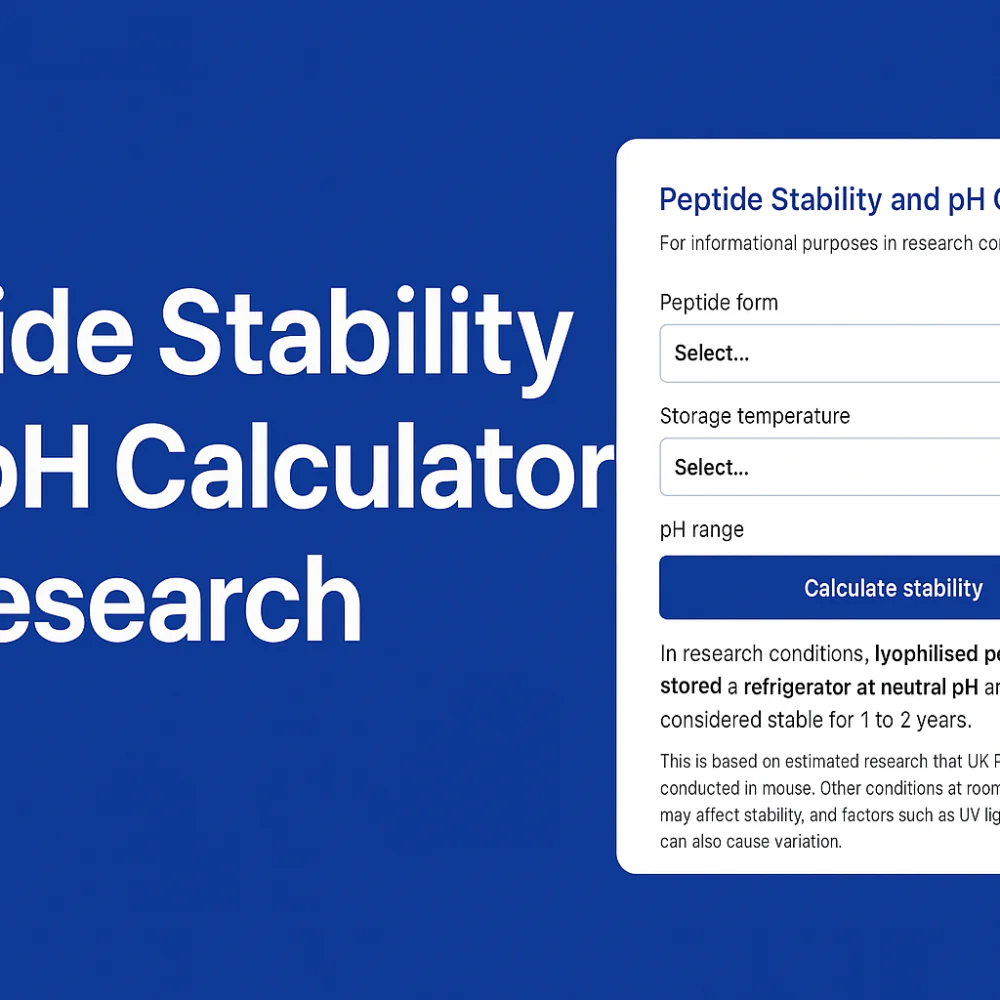
This quick guide explains how pH, temperature, light, and handling can influence degradation in a laboratory environment. It supports the calculator below so researchers can make informed storage decisions in vitro.
Key factors that affect peptide stability
- Temperature. Refrigeration and freezing reduce kinetic activity, which slows degradation. Avoid repeated freeze–thaw cycles.
- pH. Very acidic or alkaline conditions can increase hydrolysis or side reactions. Neutral pH is generally more stable for many sequences.
- Light and oxygen. UV exposure and oxidative stress can accelerate breakdown. Store out of light with suitable closures.
- Matrix. Lyophilised powders usually show longer stability than reconstituted solutions in research conditions.
Tip: Use the calculator to view a stability window for your chosen form, temperature, and pH. Results are generalised for research. Not for human or veterinary use.